



Bücher
“Lesen stärkt die Seele.”
– Voltaire –
Ben Weissman, Gründer und Geschäftsführer der Solisyon, ist Microsoft Data Platform MVP, der erste deutsche BimlHero, MCSE, Mitglied des Microsoft Professional Programms für Big Data, Artificial Intelligence und Data Science, er arbeitet seit Version 6.5 mit SQL Servern und ist ein zertifizierter Data Vault Data Modeler. Seit 2017 ist er als Autor und Co-Autor auch mit Beiträgen zur Fachliteratur in Print und E-Book vertreten.
(In englischer Sprache!)
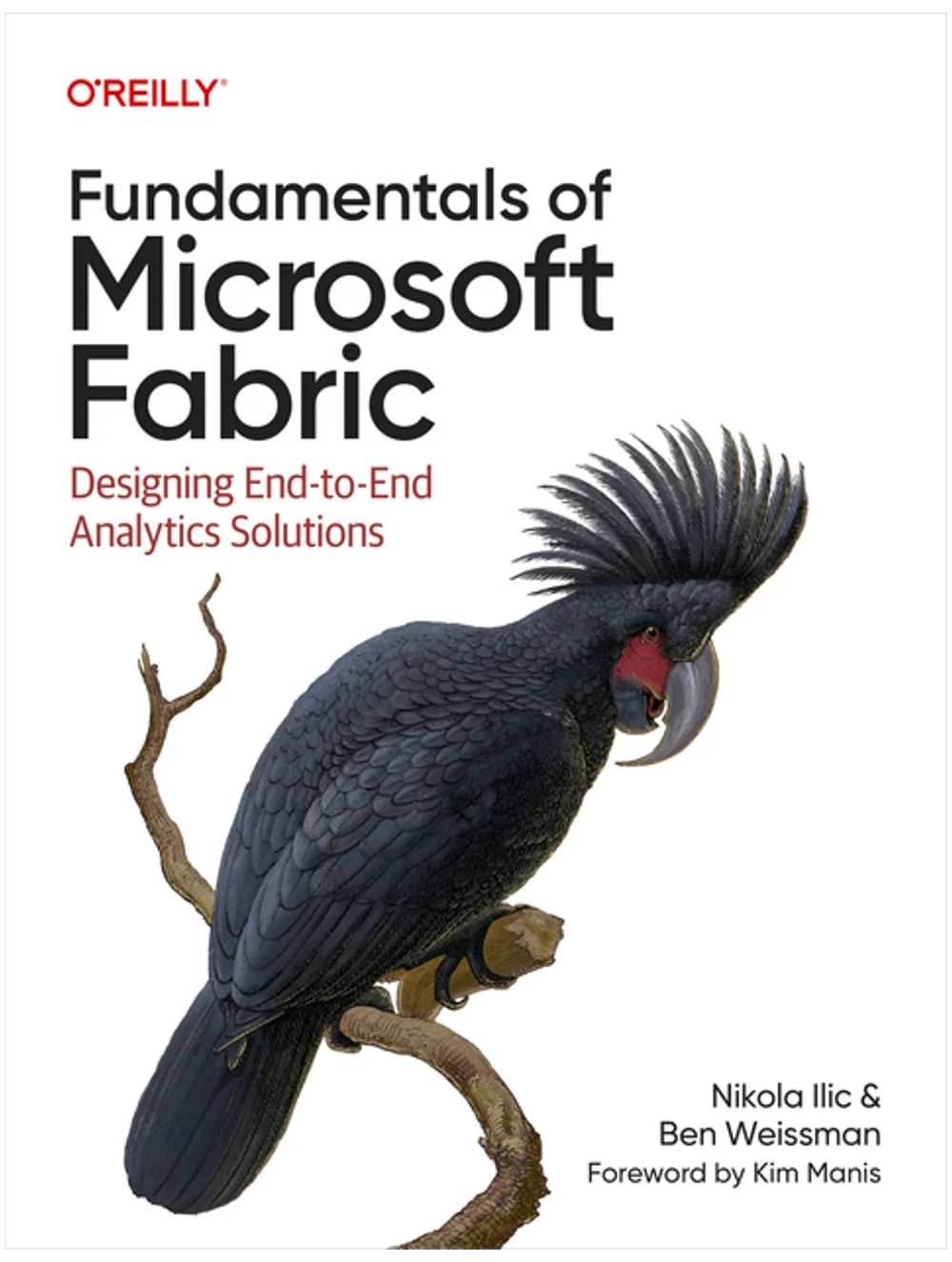
Fundamentals of
Microsoft Fabric
Fundamentals of Microsoft Fabric
In the rapidly evolving world of data and analytics, professionals face the challenge of navigating complex platforms in order to build more efficient solutions. Microsoft Fabric, hailed as Microsoft’s “biggest data product in history after SQL Server,” offers powerful capabilities but comes with a steep learning curve. The myriad of choices within Fabric can be overwhelming, with multiple ways to tackle tasks, not all of which are equally efficient.
This book serves as a definitive roadmap to understanding Microsoft Fabric–and leveraging it to suit your needs. Authors Nikola Ilic and Ben Weissman demystify the core concepts and components necessary to build, manage, and administer robust data solutions within this game-changing product.
- Discover the core Microsoft Fabric components and understand key concepts and techniques for building a robust data platform
- Learn to apply Microsoft Fabric effectively in your day-to-day job
- Understand the concept of a lake-centric architecture
- Gain the skills to implement a scalable and efficient end-to-end analytics solution
- Manage and administer a Fabric tenant
Autors:
- Nicola Ilic
- Benjamin Weissman

Azure Arc-enabled
Data Services Revealed
Azure Arc-enabled Data Services Revealed

Get introduced to Azure Arc-enabled Data Services and the powerful capabilities to deploy and manage local, on-premises, and hybrid cloud data resources using the same centralized management and tooling you get from the Azure cloud. This book shows how you can deploy and manage databases running on SQL Server and Postgres in your corporate data center or any cloud as if they were part of the Azure platform. This second edition has been updated to the latest codebase, allowing you to use this book as your handbook to get started with Azure Arc-enabled Data Services today. Learn how to benefit from Azure’s centralized management, the automated rollout of patches and updates, managed backups, and more.
This book is the perfect choice for anyone looking for a hybrid or multi-vendor cloud strategy for their data estate. The authors walk you through the possibilities and requirements to get Azure SQL Managed Instance and PostgresSQL Hyperscale deployed outside of Azure, so the services are accessible to companies that cannot move to the cloud or do not want to use the Microsoft cloud exclusively. The technology described in this book will benefit those required to keep sensitive services, such as medical databases, away from the public cloud equally as those who can’t move to a public cloud for other reasons such as infrastructure constraints but still want to benefit from the Azure cloud and the centralized management and tooling that it supports.
Autors:
- Anthony E. Nocentino
- Benjamin Weissman

SQL Server
on Kubernetes
SQL Server on Kubernetes
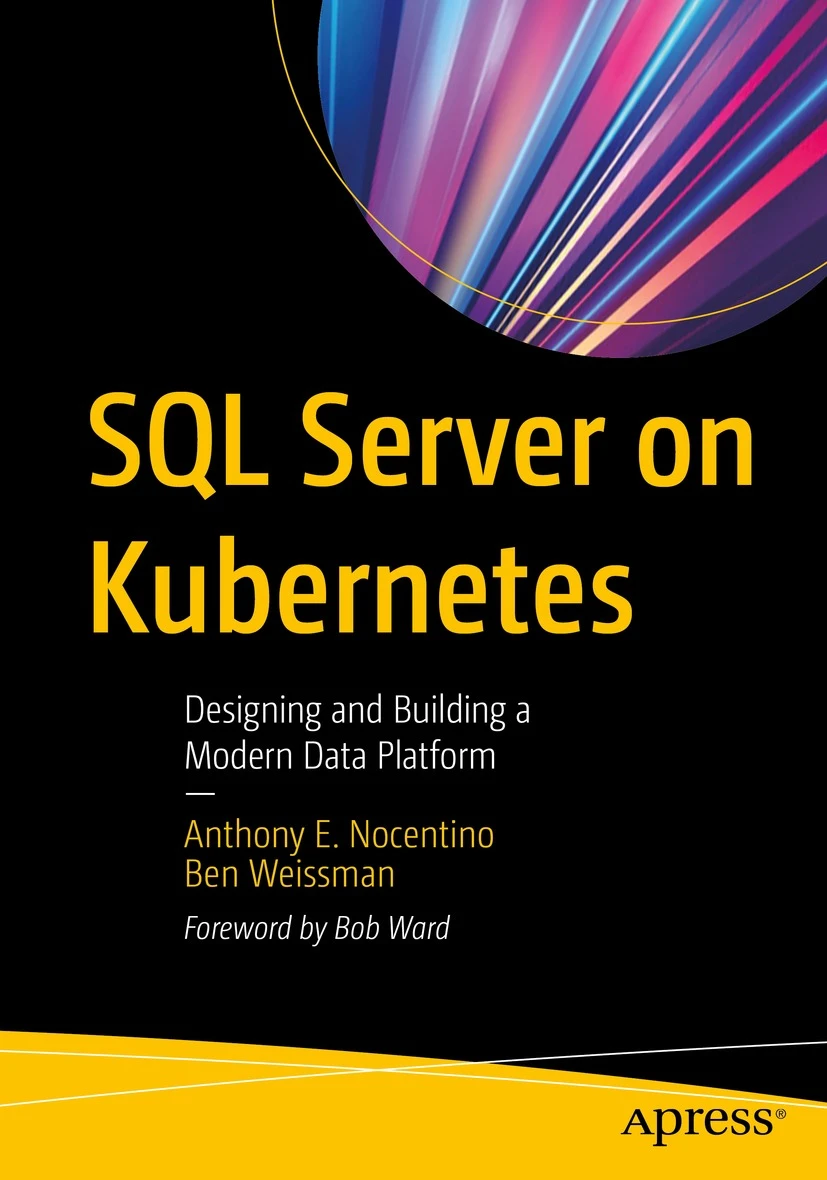
Build a modern data platform by deploying SQL Server in Kubernetes. Modern application deployment needs to be fast and consistent to keep up with business objectives and Kubernetes is quickly becoming the standard for deploying container-based applications, fast. This book introduces Kubernetes and its core concepts. Then it shows you how to build and interact with a Kubernetes cluster. Next, it goes deep into deploying and operationalizing SQL Server in Kubernetes, both on premises and in cloud environments such as the Azure Cloud.
You will begin with container-based application fundamentals and then go into an architectural overview of a Kubernetes container and how it manages application state. Then you will learn the hands-on skill of building a production-ready cluster. With your cluster up and running, you will learn how to interact with your cluster and perform common administrative tasks. Once you can admin the cluster, you will learn how to deploy applications and SQL Server in Kubernetes. You will learn about high-availability options, and about using Azure Arc-enabled Data Services. By the end of this book, you will know how to set up a Kubernetes cluster, manage a cluster, deploy applications and databases, and keep everything up and running.
Autors:
- Anthony E. Nocentino
- Benjamin Weissman

SQL Server
Big Data Clusters
SQL Server Big Data Clusters
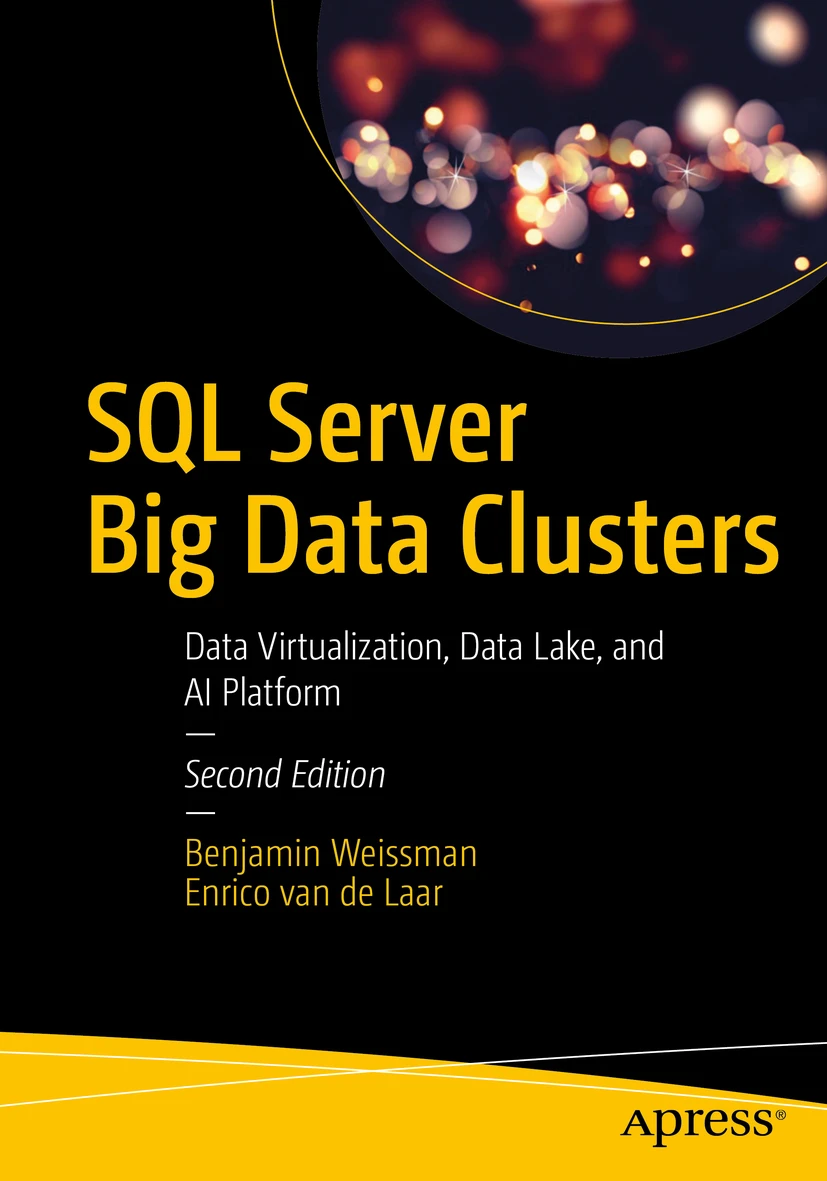
Use this guide to one of SQL Server 2019’s most impactful features―Big Data Clusters. You will learn about data virtualization and data lakes for this complete artificial intelligence (AI) and machine learning (ML) platform within the SQL Server database engine. You will know how to use Big Data Clusters to combine large volumes of streaming data for analysis along with data stored in a traditional database. For example, you can stream large volumes of data from Apache Spark in real time while executing Transact-SQL queries to bring in relevant additional data from your corporate, SQL Server database.
Filled with clear examples and use cases, this book provides everything necessary to get started working with Big Data Clusters in SQL Server 2019. You will learn about the architectural foundations that are made up from Kubernetes, Spark, HDFS, and SQL Server on Linux. You then are shown how to configure and deploy Big Data Clusters in on-premises environments or in the cloud. Next, you are taught about querying. You will learn to write queries in Transact-SQL―taking advantage of skills you have honed for years―and with those queries you will be able to examine and analyze data from a wide variety of sources such as Apache Spark.
Through the theoretical foundation provided in this book and easy-to-follow example scripts and notebooks, you will be ready to use and unveil the full potential of SQL Server 2019: combining different types of data spread across widely disparate sources into a single view that is useful for business intelligence and machine learning analysis.
Autors:
- Enrico van de Laar
- Benjamin Weissman

Automating
Custom SSIS Tasks in Biml
Automating Custom SSIS Tasks in Biml

This Mini-Guide shows you how to automate the generation of Biml (Business Intelligence Markup Language) Code from custom SSIS Tasks providing you with all the necessary sample code to get started right away! To illustrate all required steps, it also guides you through the creation of your own custom SSIS Task!
Autors:
- Tillmann Eitelberg
- Benjamin Weissman

The Biml Book
The Biml Book
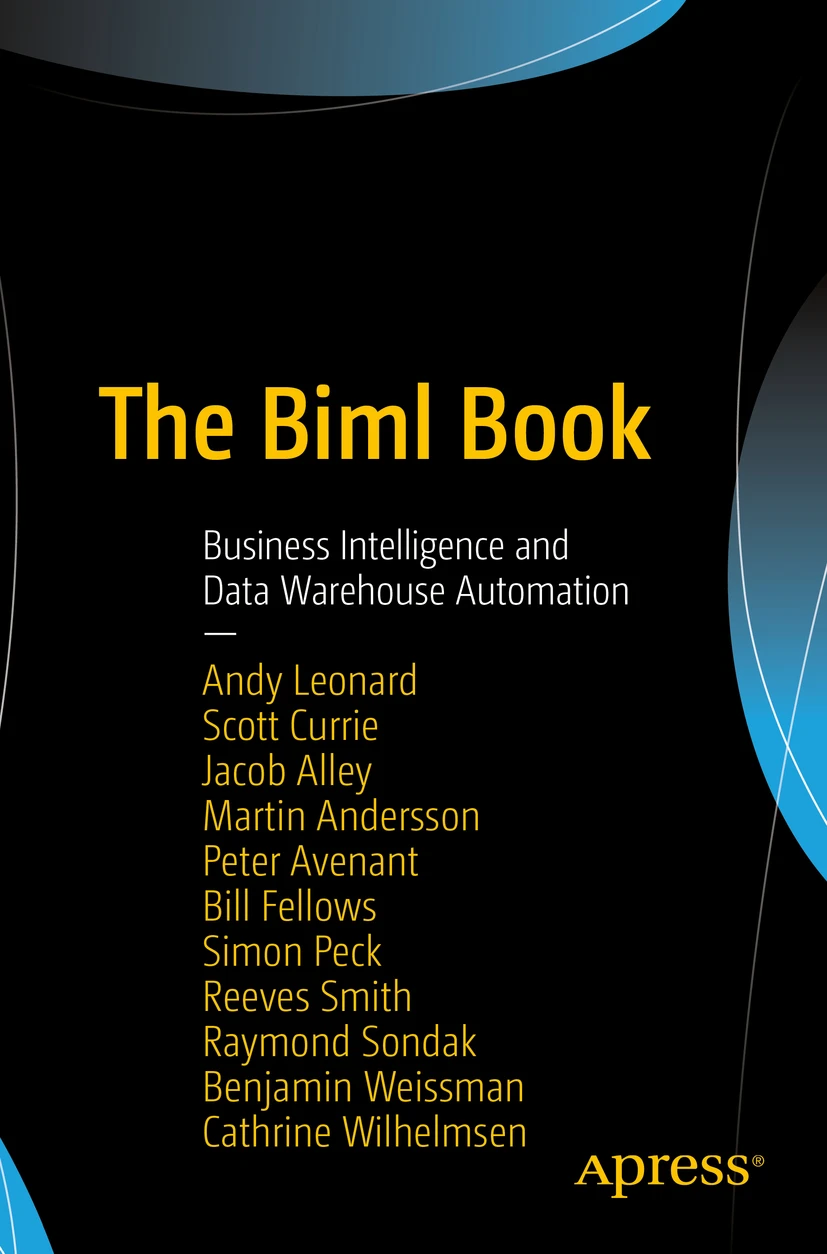
Learn Business Intelligence Markup Language (Biml) for automating much of the repetitive, manual labor involved in data integration. We teach you how to build frameworks and use advanced Biml features to get more out of SQL Server Integration Services (SSIS), Transact-SQL (T-SQL), and SQL Server Analysis Services (SSAS) than you ever thought possible.
The first part of the book starts with the basics―getting your development environment configured, Biml syntax, and scripting essentials.
Whether a beginner or a seasoned Biml expert, the next part of the book guides you through the process of using Biml to build a framework that captures both your design patterns and execution management. Design patterns are reusable code blocks that standardize the approach you use to perform certain types of data integration, logging, and other key data functions. Design patterns solve common problems encountered when developing data integration solutions.Because you do not have to build the code from scratch each time, design patterns improve your efficiency as a Biml developer.
In addition to leveraging design patterns in your framework, you will learn how to build a robust metadata store and how to package your framework into Biml bundles for deployment within your enterprise.
In the last part of the book, we teach you more advanced Biml features and capabilities, such as SSAS development, T-SQL recipes, documentation autogeneration, and Biml troubleshooting.
Autors:
- Andy Leonard
- Scott Currie
- Jacob Alley
- Martin Andersson
- Peter Avenant
- Bill Fellows
- Simon Peck
- Reeves Smith
- Raymond Sondak
- Benjamin Weissman
- Cathrine Wilhelmsen